

Optimizing Campus Access Control in Long Island and NY Schools
May 11, 2026
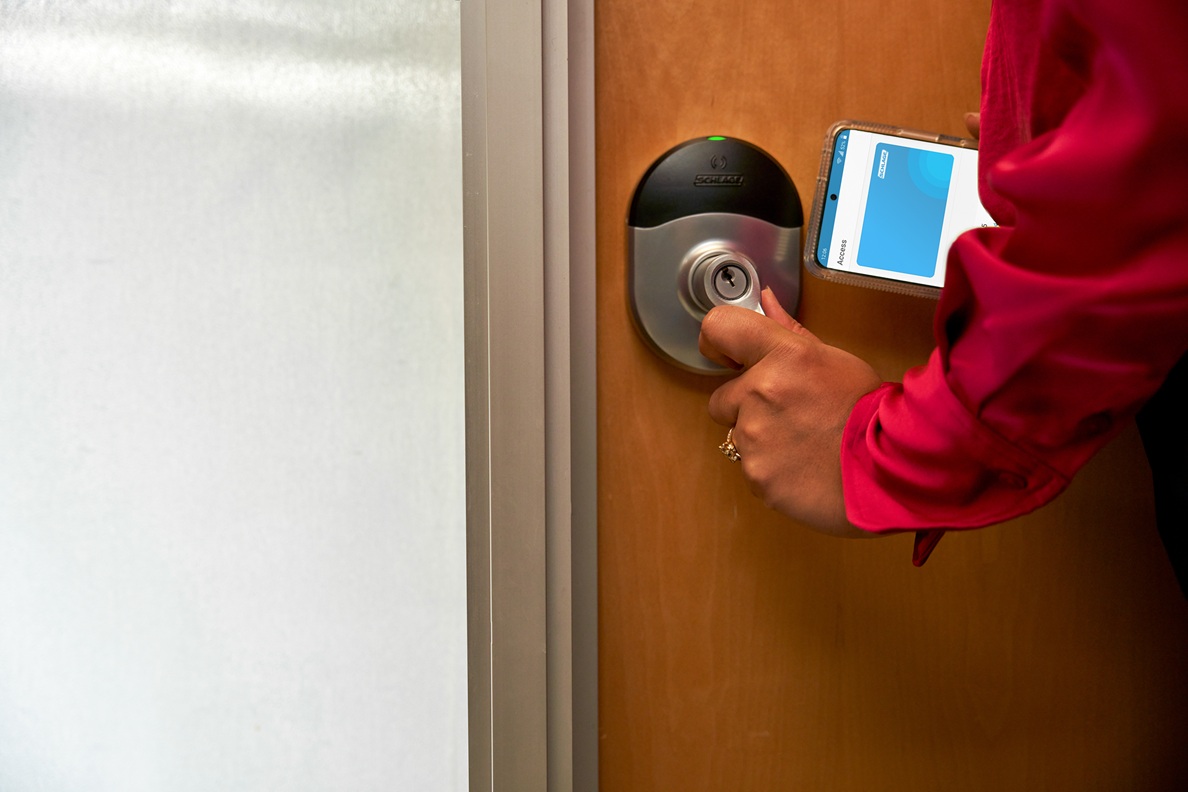
Effective school security is no longer just about sturdier locks; it is about the intelligent integration of hardware, software, and network infrastructure. For K-12 superintendents and university facilities directors across Long Island, Westchester, and NYC, the challenge lies in balancing open, welcoming campuses with the absolute necessity of a secure perimeter.
A modern access control system must do more than grant entry. It must provide real-time data, facilitate immediate Lockdown protocols, and integrate seamlessly with video management to create a proactive safety environment. This guide explores how high-performing organizations move away from “low-bid” hardware toward Bespoke Solutions that offer long-term resiliency and compliance with evolving New York State safety standards.
Why “Quality-First” Access Control is Essential for NY Schools
In the competitive landscape of security technology, the temptation to select the lowest bidder is high. However, for educational institutions in the Tri-State area, the stakes are too high for “off-the-shelf” solutions. A Quality-First, Not Cost-First approach focuses on Transformational Impact, ensuring that the system installed today remains functional and scalable for the next decade.
When schools opt for cheaper, proprietary hardware, they often find themselves “vendor-locked,” unable to integrate new technologies or expand their footprint without replacing the entire system. Premium systems, by contrast, prioritize open-platform architecture. This allows for a Consultative Partnership where your security provider can adapt the system as new threats emerge or as your campus grows.
The Problem with Standalone Systems
Many older campuses in Rockland County and Nassau County still rely on a patchwork of different systems. The IT office manages the network, while Facilities manages the physical keys. This fragmentation creates a massive security gap. If a door ajar notification isn’t synced with your Video Management System (VMS), your security team is flying blind.
The Components of a Modern Access Control Ecosystem
Moving beyond the traditional metal key requires an understanding of how different technologies work in concert. For school officials, the goal is a frictionless experience for authorized staff and students, and an impenetrable barrier for unauthorized individuals.
| Feature | Function in a School Setting | Strategic Value |
| Wireless Door Locks | Retrofits older doors without heavy cabling. | Cost-effective scalability for historic buildings. |
| Bespoke Credentialing | Uses encrypted/custom credential access cards or mobile IDs. | Prevents unauthorized key duplication and sharing. |
| Camera Integration | Links entry events to live video feeds. | Provides visual verification of every entry/exit. |
| Lockdown Automation | One-touch securing of all campus entry points. | Critical for rapid response during emergencies. |
Solving the “Door Ajar” Vulnerability
One of the most common pitfalls in school security is the propped-open door. Whether it’s for a delivery or a student letting a friend in, a door that is “ajar” nullifies millions of dollars in security investment.
Modern Access Control Systems solve this through intelligent logic. Instead of just a local buzz, the system can trigger an automated alert to the security desk, pivot the nearest IP Camera to that door, and log the event. This level of Innovation Meets Execution ensures that human error doesn’t lead to a catastrophic security breach.
Navigating New York School Safety Mandates By SAVE & Alyssa’s Law
Since the enactment of the Safe Schools Against Violence in Education (SAVE) law, New York schools have been required to develop comprehensive safety plans. More recently, Alyssa’s Law in New York, originally enacted in New Jersey in 2019 and signed into New York law by Governor Hochul on June 23, 2022 (S.7132B/A.10018), requires school boards to consider the installation of silent panic alarm systems.
Beyond Mere Compliance
While the law requires consideration, high-performing districts in Westchester and Long Island are moving toward full implementation. A silent panic alarm is most effective when it is part of a Security Integration.
For example, when a teacher activates a silent alarm via a mobile app or wearable, a truly integrated system can:
- Initiate a Lockdown across all access control systems.
- Broadcast emergency alerts via the Alarm Systems and PA.
- Provide first responders with a “live link” to specific IP Cameras based on the alarm’s location.
This isn’t just about checking a box for the state; it’s about providing Premium Systems for High-Performing Organizations that prioritize life safety over minimum requirements.
How Security Network Configuration Influences Performance
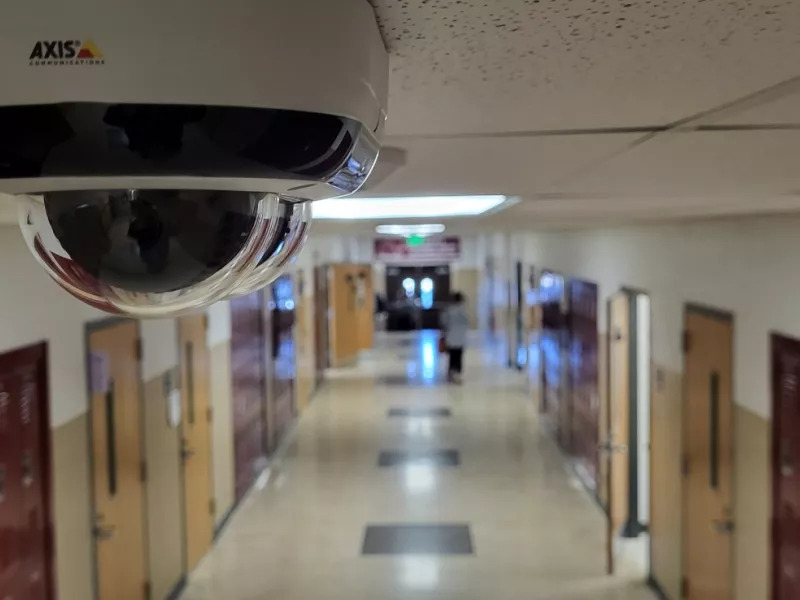
A common oversight during the procurement of security systems is the underlying network. At Digital Provisions, we emphasize that a security system is only as strong as the network it sits on, a principle echoed in the Partner Alliance for Safer Schools (PASS) Safety and Security Guidelines, which call for converged systems where access control, video, and emergency communications operate in concert rather than as standalone tools. This is where the role of a Security MSP (Managed Service Provider) becomes vital.
Avoiding Network Bottlenecks
High-definition IP Cameras and real-time access logs require significant bandwidth. If your security integration is handled by a company that doesn’t understand Security Network Configuration, your video feeds may lag exactly when you need them most.
For schools in NYC and Westchester, where RF interference is high, and building materials vary from 1920s brick to modern steel, a bespoke wireless design is mandatory. This ensures that wireless door locks maintain a constant connection to the central hub, ensuring that a Lockdown command reaches every door in milliseconds, not minutes.
Expert Insight: Always demand a dedicated VLAN (Virtual Local Area Network) for security traffic. This prevents student Netflix streaming or administrative heavy-lifting from slowing down your emergency response systems.
Streamlining Credentialing and Identity Management
For higher education officials in the Tri-State area, managing thousands of changing identities, students, faculty, contractors, and visitors, is an administrative nightmare.
Bespoke Solutions in credentialing allow for:
- Tiered Access: Professors have access to labs, while students are restricted to common areas and dorms.
- Time-Restricted Entry: Facilities staff can be granted access only during their scheduled shifts.
- Mobile Credentials: Eliminating the cost and waste of physical access cards by using encrypted smartphone apps.
This level of control doesn’t just improve safety; it improves operational efficiency. When a student loses a “key,” it can be deactivated remotely in seconds, rather than requiring a locksmith to re-key an entire wing of a building.
Transitioning from Legacy Systems to Bespoke Integration
The prospect of upgrading an entire university or K-12 district can feel overwhelming. This is where Enduring Relationships with a security partner pay off. The transition should be phased, logical, and designed to minimize disruption to the school year.
The Consultative Strategy
We don’t believe in “ripping and replacing” unless necessary. Our approach involves auditing your current infrastructure to see what can be salvaged. Can your existing cabling support new IP Cameras? Can your current door frames handle high-security wireless door locks?
By focusing on a Consultative Strategy, we help school boards and IT directors build a multi-year roadmap. This allows for the Transformational Impact of a modern system while respecting the budgetary constraints of public and private institutions across Rockland and Westchester.
Why Digital Provisions is the Preferred Partner for Tri-State Schools
Since 2000, Digital Provisions has established itself as a leader in school security across Long Island and the greater New York area. Our deep roots in Nassau and Suffolk counties have given us a unique perspective on the specific needs of K-12 districts and higher education facilities.
What Makes Us Unique?
Unlike hardware-only vendors, we are Security Integration experts. We understand the “language” of IT, the requirements of Facilities, and the safety concerns of Superintendents.
- Longevity: We have been serving the Tri-State area for over two decades, building Enduring Relationships based on trust and performance.
- Technical Mastery: We specialize in the complex Security Network Configuration that general contractors often overlook.
- Local Expertise: Whether you are navigating NYC regulations or Westchester facility upgrades, we know the local landscape.
Our mission is to handle the technical complexities of your security and automation, allowing you to focus on the core mission of education. We provide Premium Systems for High-Performing Organizations that cannot afford to fail when it matters most.
FAQ
- What is the difference between a Lockout and a Lockdown?A Lockout (often called a “Secure the Building” in NY GRP protocols) is used when there is a threat
outside the building. Business continues as usual inside, but all exterior doors are locked.
A Lockdown is used when there is an immediate threat inside the building. All doors,
interior and exterior, are locked, and movement is restricted. - Can wireless door locks be as secure as wired ones?Yes, provided they use high-level encryption and are part of a robust security network configuration.
Modern wireless locks are designed for “fail-secure” operation, meaning they remain locked even if
the network goes down. They are an excellent bespoke solution for retrofitting older schools in
Long Island, where running wire through thick masonry is cost-prohibitive. - How does an Access Control System integrate with Alarms?When your systems are integrated, a forced entry at an access-controlled door can automatically
trigger your alarm system, send a silent signal to your central monitoring station for law
enforcement dispatch, and pull up the relevant camera feed for first responders. This eliminates
the delay caused by human reporting and ensures an immediate, coordinated response. - Is there funding available for these upgrades in New York?Yes, school districts can often utilize NYS School Safety Capital Aid or specific grants like
the School Safety Alert Grant pilot program to fund the installation of panic alarms and
integrated security technologies.
Student and educator safety is the bedrock of learning. Upgrading to an integrated access control system is a vital investment that transitions schools from reactive to proactive safety. Digital Provisions provides the Tri-State area with reliable, high-performance security technology, partnering with campuses to ensure they remain secure environments for innovation.
Talk to our digital security expert today or check out our website to learn how we can transform your campus security infrastructure.