

Credentialing and Visitor Management for Hospital Access Control
September 4, 2026
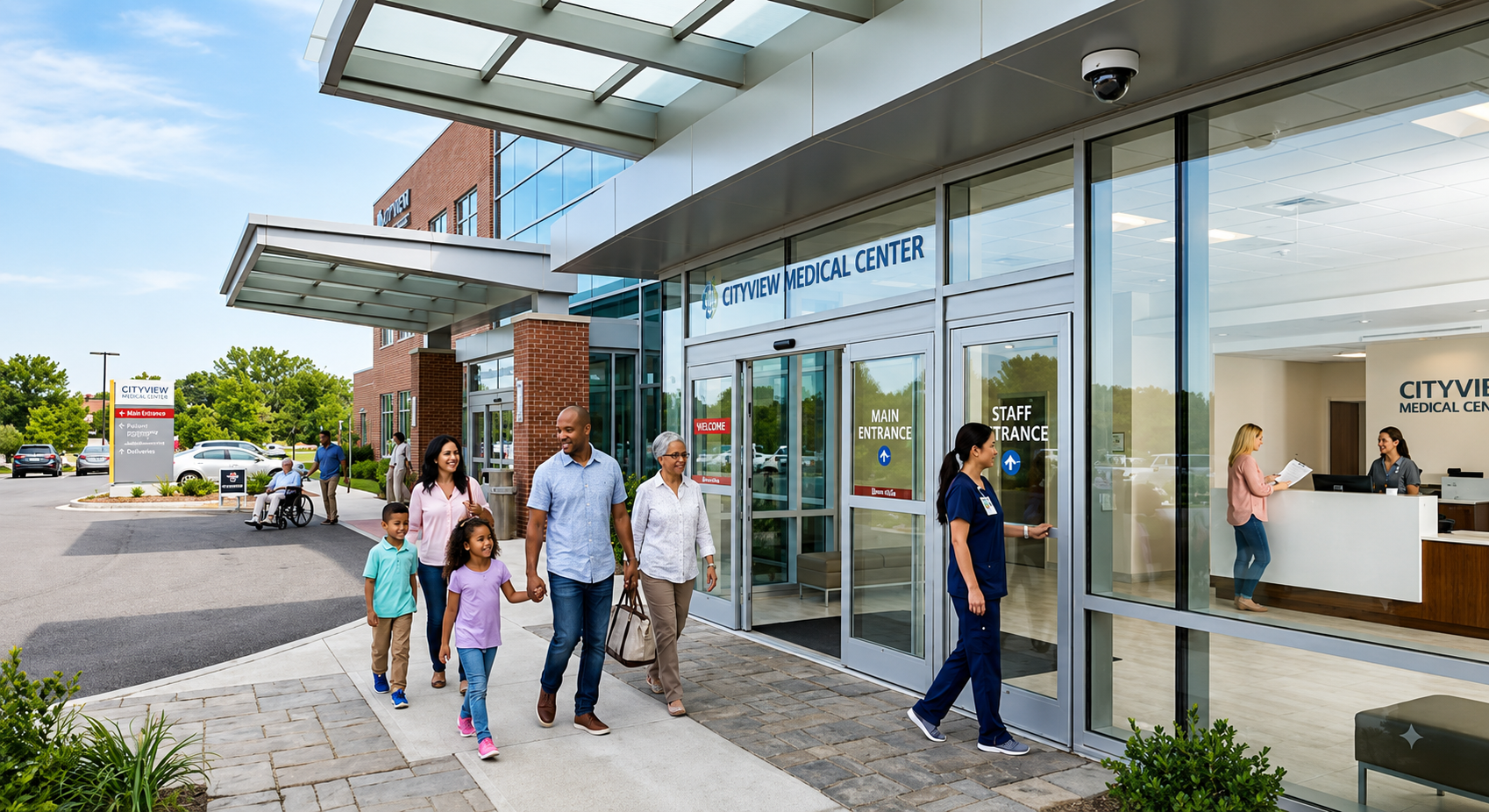
A hospital cannot lock its front door the way a warehouse can. Patients, families, vendors, and staff all need to move through the building at different times, for different reasons, with different levels of access. Strong credentialing and visitor management give healthcare facilities a way to keep that flow open while still protecting pharmacies, isolation rooms, and other sensitive areas.
Access control in a hospital is not one system doing one job. It is a set of coordinated tools, badge credentials, visitor check-in, role-based permissions, and audit trails, working together so the right people reach the right areas at the right times. For hospitals and clinics across Long Island and the greater New York area, getting this right affects patient safety, staff protection, and regulatory standing all at once.
What Is Credentialing in a Healthcare Access Control System?
Credentialing is the process of assigning each person in a facility a specific level of building access based on their role. A nurse, a contractor, and a visiting family member all get different permissions tied to the same access control platform. This keeps sensitive areas like medication rooms and surgical suites restricted to staff who actually need to be there.
In practice, credentialing works through badges, mobile credentials, or biometric identifiers linked to a central system. Each credential carries a profile: which doors it opens, during which hours, and under what conditions. A pharmacy technician’s badge might open the medication room around the clock, while a housekeeping staff badge only opens common areas and specific unlocked doors during a day shift.
The strength of a credentialing program comes from how specific it gets. Broad, one-size-fits-all access defeats the purpose. Digital Provisions designs access control systems with role-based permissions that reflect how a hospital actually operates, not a generic template applied to every door.
Why Role-Based Access Matters More in Healthcare Than Other Industries
Role-based access matters more in healthcare because the cost of a mistake is higher, and the data backs that up. Bureau of Labor Statistics figures show healthcare and social assistance workers suffered intentional injuries by another person at a rate of 10.4 per 10,000 full-time workers, against 2.1 for private industry overall. Healthcare workers accounted for 73 percent of all nonfatal workplace injuries and illnesses caused by violence. A misdelivered package in an office building is an inconvenience. An unauthorized person reaching a medication room or an isolation unit is a safety incident in a setting that already carries five times the baseline risk.
Hospitals also have more distinct roles moving through the same building than almost any other facility type. Clinical staff, administrative staff, contractors, students, clergy, law enforcement, and visitors all need different combinations of access, and those combinations often change by shift, by department, or by patient census. A modern access control platform lets facility managers set permissions for pharmacies, med cabinets, isolation rooms, surgical suites, and maternity wards individually, rather than treating the building as a single security zone.
This granularity also supports faster investigations. When an incident happens, security teams need to know exactly who had access to a space and when, not just who was in the building that day.
How Visitor Management Fits Into Hospital Security
Visitor management is the process of identifying, checking in, and tracking every non-employee who enters a healthcare facility. It typically includes ID scanning, watchlist screening, and a printed or digital badge tied to a specific purpose and time window. Platforms like Raptor and Verkada Guest turn a front desk sign-in sheet into a searchable, auditable record.
A hospital sees far more visitor traffic than most secured facilities. Family members, equipment vendors, HVAC and medical device contractors, and rotating clinical students each need a way into the building that does not require a full staff credential but still gets logged and controlled.
Digital check-in systems handle this by scanning a government-issued ID, checking it against a watchlist, and printing a badge that expires automatically. If that visitor tries to access a restricted door, the system denies entry and can alert security in real time. This closes a gap that paper logs cannot: a name written on a clipboard does not stop anyone from walking into a restricted hallway.
The Front Desk Is Not Enough on Its Own
A staffed front desk is a useful first layer, but it is not a security system by itself. Front desk staff cannot verify identity against a watchlist, track exact entry and exit times, or physically stop someone from following an authorized person through a door. This is where visitor management software connects to the building’s access control infrastructure.
When visitor records tie directly into access points, a facility gets a live picture of who is inside the building at any moment. That record becomes critical during an evacuation, a lockdown, or any incident review where administrators need to know exactly who was present and where they were credentialed to go.
Where Hospitals Most Need Restricted Access
Not every door in a hospital carries the same risk. Some areas require tighter control because of what they contain or who they protect. Understanding these zones helps facility managers prioritize where credentialing investment matters most.
Pharmacies and medication rooms hold controlled substances, and federal law is explicit about who may enter them. DEA physical security regulations require that controlled substances storage areas be “accessible only to an absolute minimum number of specifically authorized employees,” with any maintenance worker or visitor kept under observation by an employee authorized in writing. That is a role-based access requirement written into the Code of Federal Regulations. Isolation rooms protect immunocompromised patients or contain infectious cases, so access needs to be limited and tracked for both infection control and safety reasons. Surgical suites and maternity wards are high-sensitivity clinical areas where unauthorized entry creates both safety risk and patient privacy concerns. Server rooms and med device closets protect the technology backbone of the hospital, including systems tied to patient records and connected medical equipment. NICU and pediatric units require some of the tightest access protocols in any hospital, given the vulnerability of the patients inside.
Each of these areas benefits from role-based permissions rather than a single master key or a shared code that everyone on staff happens to know. These same zones are also where camera coverage carries the most weight, which we break down further in our guide to video surveillance for high-risk healthcare areas like ICUs, emergency departments, and behavioral health units.
How Modern Credential Types Compare in Clinical Settings
Hospitals today have more credential options than the traditional metal key or basic swipe card. Choosing the right mix depends on the department, the staff turnover rate, and how often credentials need to be issued or revoked.
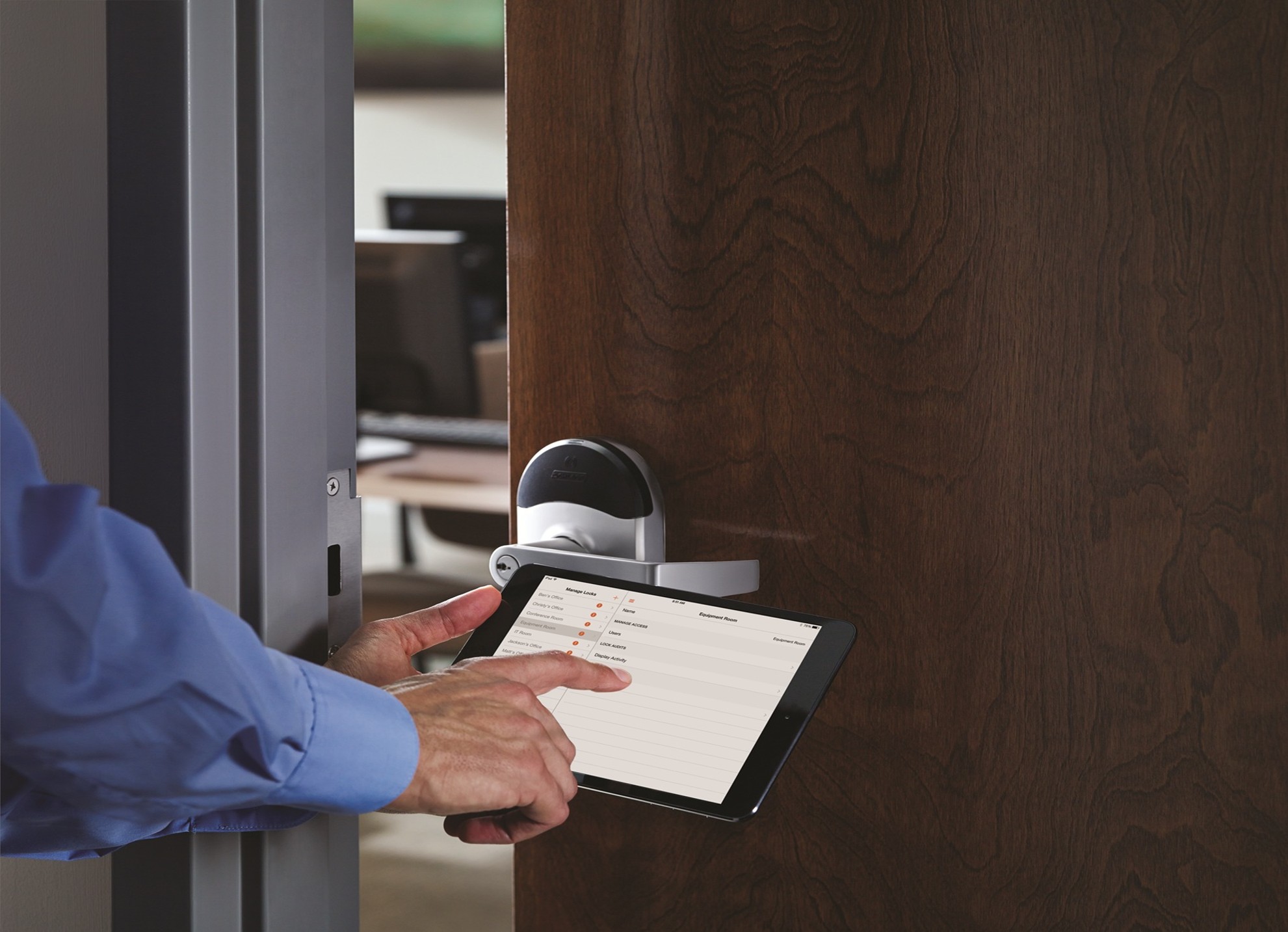
Proximity and smart cards remain the most common credential in healthcare because they are affordable, familiar to staff, and easy to issue in bulk. They work well for general staff access but offer less flexibility for temporary or rotating personnel. Mobile credentials use a smartphone to unlock doors, which reduces the physical badge management burden and makes it easier to revoke access immediately if a phone is lost. Biometric access, including fingerprint or facial recognition, adds a layer of certainty in the highest-security areas like pharmacies or medication rooms, since a badge can be shared or lost but a biometric credential cannot. HID readers paired with enterprise platforms like LenelS2 or Genetec give administrators centralized control over thousands of credentials across a single hospital or a multi-site health system, with real-time status on every badge in circulation.
Most hospitals end up using a blend rather than a single standard, running general staff access on standard badges while medication rooms and surgical areas add biometric or mobile verification as a second layer.
Common Mistakes Hospitals Make With Access Control
Even well-funded security programs run into avoidable problems. A few patterns show up repeatedly across healthcare facilities.
The first is credential sprawl, where badges are issued but never deactivated after an employee leaves or a contractor’s project ends. Over time, this leaves a facility with active credentials tied to people who no longer work there, a real vulnerability that often goes unnoticed until an audit or an incident forces a review. The second is treating visitor management as separate from access control instead of integrating the two, which creates blind spots exactly where hospitals see the most unpredictable foot traffic. The third is applying the same access rules across an entire building instead of adjusting permissions by zone, which either locks out staff who need flexibility or leaves sensitive areas under-protected. The fourth is skipping regular audits of who has access to what. Under Joint Commission workplace violence prevention requirements in effect for accredited hospitals since January 2022, facilities must conduct an annual worksite analysis of their environment of care and act on what it finds. Permissions that made sense a year ago rarely still reflect current staffing and department needs.
Addressing these issues does not usually require replacing an entire system. It requires a periodic review process and a platform flexible enough to update permissions without a full hardware overhaul.
What an Integrated Access Control and Visitor Management System Looks Like
An integrated system connects credentialing, visitor check-in, and door hardware into a single management platform rather than running them as separate tools. This gives facility administrators one place to see badge status, visitor logs, and door activity across an entire hospital or health system.
In a connected setup, a staff badge and a visitor pass both report into the same dashboard. Security teams can see, in real time, who is in the building, which doors they can access, and whether any access attempt was denied. If a visitor badge tries a restricted door, that event logs automatically and can trigger an alert. If a staff member’s role changes, their permissions update centrally instead of requiring someone to reprogram individual door readers.
Digital Provisions builds these systems around cloud-capable, credential-agnostic platforms that support real-time lockdown, visitor management, and integration with video and alarm systems. That means a hospital is not locked into a single hardware vendor and can scale the system as departments grow or as a health system adds new facilities across New York and the Tri-State Area.
Integration With Video and Alarm Systems Strengthens the Picture
Access control works best when it is not the only source of information during an incident. Pairing badge and visitor data with video surveillance gives security teams visual confirmation of who used a credential, not just a record that the credential was used.
This matters in healthcare specifically because badges and mobile credentials can be shared, borrowed, or misused, even with the best policies in place. A camera at a restricted door confirms that the person entering matches the credential on file. Tying access events to alarm systems as well means investigations move faster and incident reports carry more weight during compliance reviews.
Compliance and Audit Trail Considerations
Every credential use in a modern access control system creates a timestamped record. That record shows who entered a space, when, and whether the entry was authorized or denied. For hospitals, this audit trail supports both day-to-day operations and formal compliance reviews.
It also maps directly to what regulators already expect. The HIPAA Security Rule’s physical safeguards require covered entities to implement procedures that “control and validate a person’s access to facilities based on their role or function, including visitor control.” Role-based credentialing and visitor management are not two separate best practices a hospital may choose to adopt. They are named together in the same federal implementation specification.
A detailed access log gives administrators documentation to show that restricted areas were, in fact, restricted, and that only authorized personnel entered them. It also protects the facility months later, when a dispute or licensing review arrives and staff memory is no longer enough.
Frequently Asked Questions
What is the difference between access control and visitor management?
Access control manages permanent credentials for staff and regular personnel, determining which doors they can open and when. Visitor management handles temporary, one-time entry for guests, vendors, and contractors, typically through ID scanning and a time-limited badge. The two work best when connected to the same platform so all building activity is visible in one place.
Can hospitals restrict access to specific rooms like pharmacies without restricting the whole building?
Yes. Role-based access control lets facility managers set individual permissions for specific rooms or zones, such as pharmacies, medication rooms, or isolation units, without changing access rules for the rest of the building. This allows general staff and visitor movement to continue normally while high-risk areas stay locked to authorized credentials only.
How often should a hospital audit its access control permissions?
Most healthcare facilities benefit from reviewing credential permissions on a quarterly basis, with immediate deactivation whenever an employee or contractor leaves. Regular audits catch outdated permissions before they become a security gap, particularly in departments with higher staff turnover.
Do mobile credentials work as well as physical badges in a hospital setting?
Mobile credentials work well for staff who already carry a hospital-issued or personal smartphone during shifts, and they make deactivation faster since a lost phone can be remotely disabled. Many hospitals use a mix of mobile credentials for general staff and physical badges or biometric verification for the highest-security areas.
What happens to visitor and access records after they are collected?
Visitor logs and access records are typically retained for a set period to support compliance reviews, incident investigations, and liability documentation. Retention length depends on the facility’s internal policy and any applicable regulatory requirements, but longer retention generally provides stronger protection during a dispute or audit.
Putting It All Together
Credentialing and visitor management are not separate projects. They work as one system that determines who moves through a hospital, where they can go, and how that activity gets recorded. Role-based permissions keep pharmacies, isolation rooms, and surgical areas restricted without slowing down the general flow of patients and staff. Visitor check-in closes the gap that a sign-in sheet leaves open. Together, integrated with video and alarm systems, they give hospital administrators a real-time, auditable picture of building activity instead of a patchwork of disconnected logs.
Digital Provisions has spent over two decades building security systems for hospitals, clinics, and critical care facilities across Long Island, Westchester County, Rockland County, and New York City, with more than 8,500 doors under access control today. Our systems are built with role-based credentialing, integrated visitor management, and audit-ready reporting designed for the way healthcare facilities actually operate, from a single clinic to a multi-site health system. Talk to our digital security expert today to design a credentialing and access control program tailored to your facility.